
If you were born between 1995 and 2008, platforms like Wattpad and Tumblr were more than websites. They were communities, identity spaces and early trust ecosystems for writers, readers and fandom cultures. In the past few months, a new platform has entered this lineage: Substack.
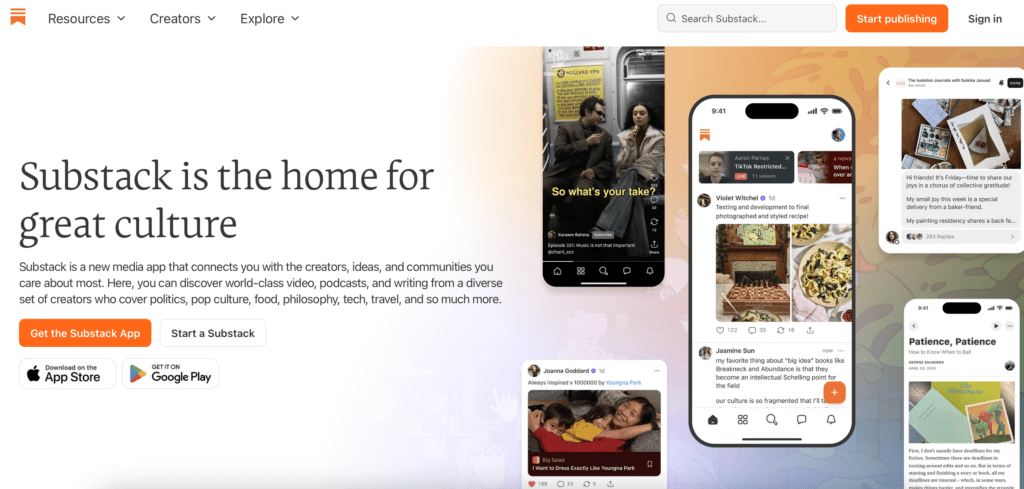
Just like Wattpad and other online reading, writing, and video platforms that double as community spaces, Substack operates as an independent publishing platform that allows writers, journalists and creators to build direct relationships with their audiences through newsletters, podcasts and video content, outside traditional publishing systems.
What platforms like Wattpad, Tumblr and now Substack share is not just community-building. They represent a deeper shift in how trust, credibility and influence are formed online. This is no longer just a cultural shift. It is a communications shift. One that directly impacts how narratives are shaped, how authority is established and how brands, institutions and individuals build long-term relevance in a fragmented media landscape.
So what exactly is Substack, how does it work, who is using it, and most importantly, why does it matter in the context of Public Relations?
How it works
Substack’s strategic difference is not its format, but its structure. It removes traditional platform dependency by enabling creators to build direct, owned relationships with their audiences, outside algorithmic control, advertising models and institutional gatekeeping. Distribution is anchored in email, not feeds. Audience ownership sits with the creator, not the platform. Monetisation is opt-in, not ad-driven.
This creates a publishing ecosystem where trust is built through continuity, identity and relationship, rather than visibility, virality or platform amplification.
Operationally, Substack operates on a freemium model, allowing creators to publish for free and monetise through paid subscriptions if they choose, retaining the majority of revenue. But strategically, its value lies less in monetisation mechanics and more in its ability to create independent, trust-based media channels that function outside traditional publishing and social media ecosystems.
Who uses it
As mentioned earlier, Substack serves as a modern-day platform for people looking for community and content. Are you a fan of a newly-released, underrated TV series, looking for theories or an opportunity to share your own personal analysis? Are you part of a marginalised or fading cultural community, seeking to preserve, document and sustain its identity? Are you a professional in a specific industry, looking to share knowledge and inspire readers into pursuing a similar path? Substack serves as a space for these niche communities and interests. But it does not just end there.
There are many who dream of reading and writing, or just wish to publish blog articles. Whether it is hesitance, laziness, or general unwillingness, many people do not take that step to create their own websites. It might also be partially fuelled by the fear of no one reading their content should it be posted on an independent website. By uploading their works on Substack, there is already a pre-engineered platform. Because of the independence and monetisation flexibility the platform provides, more people are willing to create and upload their own content on the app.
Disadvantages of Substack
Rightfully, you must be wondering. Is this too good to be true? How can a platform have it all?
Substack, just like every other digital platform, has its drawbacks.
Unlike other platforms, e.g., YouTube or TikTok, it does not have an elaborate search engine. Hence, any and every form of reach is entirely dependent on the creator, with the general added interest in Substack. Active promotion is required for wider reach.
Additionally, if you are an artistic individual and enjoy designing to reflect who you are as a person, the limited design customisation provided by the platform will be of disappointment to you. This can limit personal brand expression and identity signalling for creators who value strong visual differentiation.
Lastly, while monetisation benefits creators, it can introduce friction for readers, particularly in knowledge-driven and educational content spaces where paywalls may limit access. This is particularly relevant in educational and knowledge-driven content spaces.
Does Substack matter for branding and PR in 2026?
Short answer is slowly but surely. Substack is quietly building legitimacy as a trust-based publishing space, where audiences increasingly place credibility in individual voices rather than institutional media alone.
Audiences are increasingly placing credibility in consistent, transparent voices rather than large, anonymous platforms. This shift presents both opportunity and risk, as the first wave of this shift in trust and credibility happened with celebrities and influencers. For communications teams, this signals a structural change in influence. Reputation is no longer built primarily through media placements alone, but through narrative alignment with trusted creators, experts and community voices.
In Singapore, creators have adopted Substack to build their own audience ecosystems. For example, Meanwhile in Singapore … shares monthly reflections on life in the city-state, while Unpacked breaks down local politics and policy for an engaged weekly readership, both showing how individual voices can cultivate trusted communities outside traditional media. These local cases illustrate how Substack’s model supports niche, relevance-driven communication that resonates with specific reader interests
Substack’s rise also emphasises how content is moving from reach to relevance. In the past, the more views and shares your content had, the more trusted it was. With Substack, even content that is not necessarily popular can be trusted from sheer relevance. However, this also challenges the traditional business narrative that Key Performance Indicator (KPI) is the best way to measure success.
Substack serves as a platform for people to express their opinions. Stances are made. Neutral positioning is becoming less compelling in spaces where audiences actively seek perspective, interpretation and conviction. This means that brands will also have to be firm on their opinions and stance to properly connect with the shifting mentality in the audience. They will have to bring up perspectives and original experiences and point of views. This shift in mindset is also very clearly seen in how the newer generation put higher importance on concepts like Corporate Social Responsibility (CSR).
Also read our ebook: Mastering the art of storytelling for business growth and scalability in 2026
What this means for PR and communications teams
Substack represents a shift from broadcast-led communications to relationship-led communications. Traditional PR strategies have historically focused on reach, visibility and media volume. But in loyalty-driven ecosystems, influence is built through consistency, credibility and community trust rather than exposure alone.
For PR professionals, this reframes how authority is built. Thought leadership is no longer just about placing commentary in established media titles. It is about building owned narrative platforms, cultivating trusted voices and developing long-term audience relationships that exist independently of algorithms and media gatekeepers.
This also changes crisis communications, reputation management and brand trust-building. When credibility lives within individual-led communities, influence becomes decentralised. Brands must engage in dialogue rather than distribution, alignment rather than amplification, and narrative participation rather than narrative control.
In this environment, communications strategy shifts from visibility management to trust architecture.
Final thoughts
All in all, Substack highlights a fundamental shift in how influence, trust and credibility are built. It reflects a move away from mass visibility towards relationship-based authority, where loyalty carries more weight than reach and relevance outweighs virality.
For communications and PR, this signals a deeper transformation. The future of brand building is not driven by louder messaging, but by stronger relationships. Not by platform dominance, but by trust equity. Not by distribution power, but by narrative credibility.
In an increasingly automated and AI-driven digital landscape, the most valuable currency for brands may no longer be attention, but authenticity, alignment and human connection. Curious to learn more about PR trends and shifts in brand communication strategies in 2026? Drop us a line at hello (a)syncpr.co today!